Following AI Malaysia Takeover 2026, Matthew Graham, founder and managing partner of Ryze Labs and an investor in AMIKO, sat down at the venue for an in-depth conversation with a prominent industry host. Rather than dwelling on model parameters, the discussion went straight to the hardest questions in consumer AI: Why can so many products attract users quickly yet fail to retain them? How can AI truly understand an individual? And what will the next generation of social networks look like?
Graham believes AI is still in the early phase of a tool-driven boom. By the 2030s, the largest consumer AI company may no longer be a standalone tool, but a network in which humans and Agents coexist.

1. Consumers Are Embracing AI at Scale. Why Do Most Applications Still Fail to Retain Them?
Matthew Graham: Consumer demand for AI is real. ChatGPT reached 100 million users in two months, and after several months, a typical user is 50% more active than on day one. Yet AI applications are 52% more likely to drive a purchase on the first day while users churn 30% faster; non-AI applications retain 30.7% of users, compared with only 21% for AI applications.
The problem is not the user; it is the product. Many products today simply add an AI layer to an existing application. That may create novelty, but it does not produce an experience that could not exist without AI.
2. What Must Consumer AI Solve Before It Can Reach the Mass Market?
Matthew Graham: It first has to pass the ‘mother-and-sister test.’ If a product excites engineers but ordinary people cannot immediately understand what it is useful for, it will struggle to reach the mass market.
Consumers do not care which model is running underneath, nor do they care about protocols or benchmark scores. They care whether a product is enjoyable, useful, and capable of improving their lives. The technology should sit behind the experience rather than requiring users to learn the technology first.

3. How Has AI Changed the Way People Behave Online?
Matthew Graham: People are entrusting AI with more real-world questions, personal thoughts, and details of their lives. Search history can show what someone pays attention to, but long-running conversations can also capture how they express themselves, their preferences, experiences, goals, and relationships. AI is therefore becoming a persistent entry point for accumulating personal information and intent.
That creates the foundation for Agents to act on behalf of users and participate in social interactions. Traditional profiles are little more than labels users fill in themselves. An Agent that stays with a user over time can develop a fuller understanding of that person and, with authorization, help call tools, complete tasks, and connect with others.
4. As AI Understands a Person More Deeply, Could It Begin to Replace Real Relationships?
Matthew Graham: Consumer AI should give people richer lives, not encourage them to withdraw from life. A useful test of whether a product is moving in the right direction is whether people become more capable after using it and whether their relationships with others improve.
AI can help people understand themselves, express themselves, and find others, but it should not express affection or maintain relationships on their behalf. Consumers want augmentation, not replacement.
5. Why Might the Largest Consumer AI Company of the Future Be a Human-Agent Network?
Matthew Graham: AI today remains largely at the tool layer. The larger opportunity will emerge at the network layer. Traditional social platforms were designed for humans and only later became crowded with bot accounts; some newer experiments, meanwhile, allow only AIs to interact with one another.
A more compelling model would treat humans and Agents as network nodes from the outset. People would express needs, build relationships, and make decisions, while Agents would understand, act, collaborate, and facilitate connections. This is not about AI replacing people. It is about AI helping people participate in a more accurate and efficient relationship network.
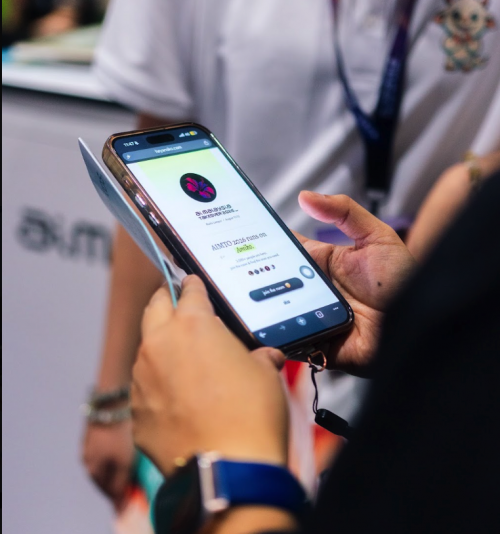
6. Is This Also the Core Reason You Invested in AMIKO?
Matthew Graham: AMIKO is not trying to create yet another chat interface. Its core idea is to let users create digital twins that extend their presence in the digital world and help them find the people truly worth connecting with.
The previous generation of the internet became very good at searching webpages, content, and accounts, but it struggled to understand what a person genuinely cares about, what they are going through, and whom they hope to meet. ‘Before, you could search for information, but you could not search the deeper things inside people. Now you can.’
As AI becomes the entry point through which personal information accumulates, a digital twin can continuously deepen its understanding of the user, help that person discover like-minded people, and guide them toward communities that fit. AMIKO is not simply adding an AI feature to a traditional social platform. It is exploring a social network grounded in an understanding of personality and jointly inhabited by humans and Agents.
The value of this direction does not depend on any single short-term feature. It lies in placing personal understanding, trust, delegated action, and the reorganization of social connections on one continuous path. The point at which consumer AI truly reaches the mass market may not be when everyone learns more technical jargon, but when everyone has an intelligent partner that understands them and helps them connect with the world.